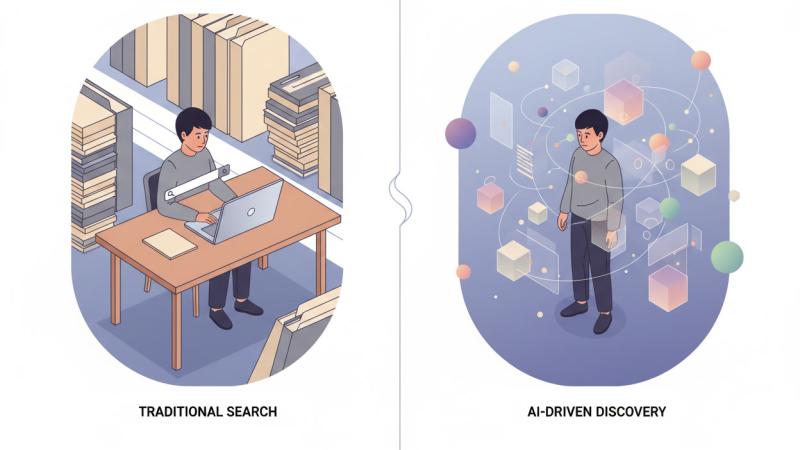
Google's continued rollout of AI-powered search features, alongside changes to Google Discover, is starting to reshape how people find information online. Instead of relying purely on search queries, users are now being presented with curated content, AI-generated summaries, and personalised recommendations before they even click anything.
In practical terms, this marks a shift from a search-led model to a discovery-led one, where content is surfaced proactively rather than actively sought out.
A move beyond traditional search
For years, SEO has been built around ranking for keywords and capturing intent at the moment someone searches. That model is still relevant, but it is no longer the full picture.
Google's AI features are increasingly able to interpret context, behaviour, and user preferences to deliver answers directly in the search experience itself. In some cases, this reduces the need for users to visit a website at all.
At the same time, platforms like Google Discover are gaining influence by surfacing content based on user interests rather than specific queries. For businesses, this opens up new routes to visibility, but also introduces a level of unpredictability that traditional SEO never really had.
Discovery is becoming fragmented
Google is no longer the only place people go to find information. AI tools, social platforms, and recommendation engines are all becoming part of the research journey, particularly for product discovery and early-stage exploration.
As a result, visibility is no longer concentrated in one place. Businesses that rely heavily on traditional search alone may find they are missing audiences who are discovering content elsewhere.
What this means for businesses and digital teams
This shift does not make SEO obsolete, but it does change how it should be approached. Ranking still matters, but it is only one part of a broader visibility strategy.
- Creating high-quality, experience-led content that demonstrates real expertise
- Expanding beyond text into formats like video, imagery, and structured content
- Making content easy for AI systems to interpret and surface
- Building a presence across platforms where discovery is already happening
For digital agencies, this is where things get interesting. Clients are starting to notice changes in traffic patterns, and many are unsure how to respond. There is a clear opportunity to guide them through what is changing, and more importantly, what to do about it.
A broader approach to visibility
The key takeaway is simple: search is no longer confined to a list of results on a page. It is part of a wider ecosystem where content can appear in different formats, in different places, often before a user has even decided what they are looking for.
Businesses that recognise this early, and adjust their approach accordingly, are far more likely to stay visible as AI continues to reshape how digital discovery works.