NASA has publicly pushed back against a viral conspiracy theory claiming that Earth would lose gravity for seven seconds on 12 August 2026, as the false story resurfaced online around the real solar eclipse.
The claim centred on a supposed secret NASA programme called 'Project Anchor', which was said to be preparing for a temporary loss of gravity. In a statement provided to PEOPLE this week, NASA explained that Earth's gravity is determined by its mass and that a solar eclipse has no unusual effect on the planet's gravitational force.
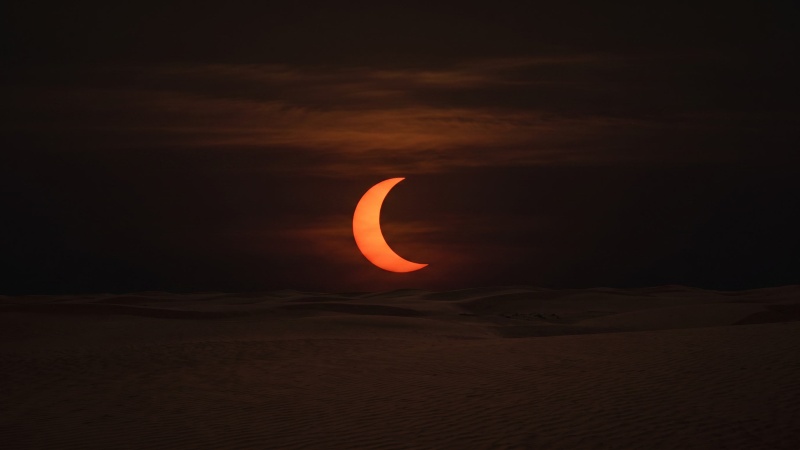
The timing gave the false claim a particularly useful hook. On 12 August, people across the UK really did experience a substantial partial solar eclipse. According to the Royal Observatory Greenwich, around 90-96% of the Sun was covered from the UK and Ireland depending on location, while totality was visible from places including Greenland, Iceland and parts of Spain.
A real event gave the hoax a convincing frame
The 'Project Anchor' story was not created this week. Versions had already circulated online earlier in the year and were investigated by fact-checkers including Snopes. What made it current again was the arrival of the date used in the claim, combined with renewed social media posts and fresh responses from NASA as the eclipse approached.
The false story borrowed several devices that can make online misinformation look more convincing than it is. It used a precise date, a named programme, a large supposed budget and technical-sounding explanations involving gravitational waves. Most importantly, it attached those invented details to an astronomical event that genuinely was going to happen.
That mixture of truth and fabrication can be more persuasive than a claim that is obviously fictional. Someone checking only whether there really was a solar eclipse on 12 August would find that part confirmed, even though it provided no evidence for the much larger claim being built around it.
Why this matters beyond astronomy
For businesses and marketers, the useful part of the story is not the science of gravity. It is the way information can acquire an appearance of authority as it moves through social media.
Major events create a ready-made audience searching for updates, explanations and shareable content. That also creates opportunities for inaccurate information to travel alongside legitimate reporting. A claim does not need to be completely invented to be misleading; it can start with something real and add unsupported details around it.
The same problem can affect businesses when inaccurate information circulates about a company, product, service or industry. Repetition is not verification, and a polished post containing dates, figures or technical terminology is not necessarily evidence that the information came from the organisation it names.
Going back to the original source still matters
In this case, checking NASA's position quickly separates the genuine eclipse from the fictional 'Project Anchor'. NASA's official eclipse information describes the real astronomical event, while the agency's response to the viral claim states that the eclipse had no unusual effect on Earth's gravity.
For organisations publishing or reacting to fast-moving stories online, that distinction is worth keeping in mind. Before repeating a claim involving a company, regulator, public body or other named organisation, checking what that organisation has actually published or said can prevent an entertaining piece of misinformation from becoming part of a business's own communications.
The eclipse was real. 'Project Anchor' was not. Their appearance together online is a neat example of how quickly the boundary can become blurred when a genuine event gives a fabricated story something solid to attach itself to.